Vaccine Schedule at 2 Months: What to Expect
"The 2-month visit is the biggest vaccine day of the first year. Here's what's due, what happens in the room, what's normal afterward, and when to call."

Two months is the big one
The appointment card is on the counter. Eight weeks. A room number. Bring the vaccine record.
Then you type “vaccine schedule 2 months” into your phone. A row of initials. The card may say 8 week vaccinations. Search results may say 2 month vaccines or 2 month shots. Same visit.
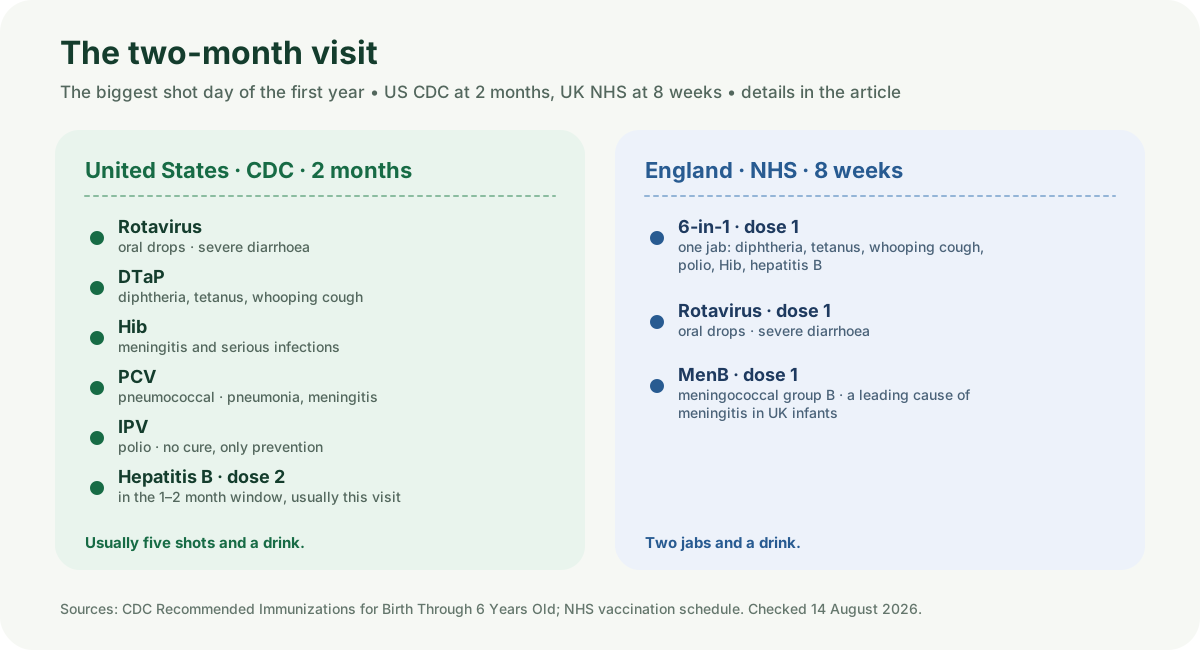
This is the first crowded vaccine visit. On the US CDC schedule, five routine first doses sit at two months, with hepatitis B also due around this point. On the NHS schedule for England, three vaccine products are due at eight weeks. They cover more diseases than the number of needles suggests.
I would not trust myself to hold those names while a nurse prepares the tray. The visit is a little frightening. Better to know what happens before you walk in.
For the months after this one, see the full schedule by age. For today, keep the card in your hand.
What’s due at two months
In the United States: the row for two months starts five series. Rotavirus dose 1 is liquid given by mouth. DTaP dose 1 covers diphtheria, tetanus, and pertussis, or whooping cough. Hib dose 1 covers Haemophilus influenzae type b. Pneumococcal conjugate vaccine, or PCV, dose 1 and inactivated polio vaccine, or IPV, dose 1 complete that row.
There may be one more name on the record. Hepatitis B dose 2 falls in its 1–2 month window and is often handled around this visit, depending on when dose 1 was given and the clinic’s schedule. That is how parents arrive at “six vaccines.” It does not always mean six needles. Rotavirus is a drink, and a clinic may use combination products that reduce the number of injections. Ask what your clinic uses.
In England: the eight-week set has three products. The 6-in-1 dose 1 is one injection. It carries protection against diphtheria, tetanus, whooping cough, polio, Hib, and hepatitis B. Rotavirus dose 1 comes as drops by mouth. MenB dose 1 is the second injection and protects against meningococcal group B bacteria. The routine schedule reduces it to a useful description: two thighs and a drink.
The sets look different because England puts six protections inside one product while the US schedule names most of them separately. Count products, diseases, and needles separately. The record should name what was given, not merely “2 month shots.”
Every one is a first dose. The next doses come at later appointments, because protection is built as a series, not finished on this morning.
What each vaccine is for
The letters are short. The illnesses are not.
DTaP: protects against diphtheria, tetanus, and whooping cough; diphtheria can damage the heart, tetanus can make breathing difficult, and whooping cough can leave a young baby struggling for breath.
Hib: protects against bacteria that can cause meningitis, sepsis, pneumonia, and other life-threatening infections; babies and young children are most at risk of serious illness.
PCV: protects against pneumococcal disease, which includes pneumonia, bloodstream infection, and meningitis.
IPV: protects against polio, an infection that can paralyse; there is no cure, only treatment for its effects and prevention through vaccination.
Rotavirus: protects against severe diarrhoea and vomiting that can dehydrate a baby enough to need hospital treatment. Worldwide, it is the most common cause of severe diarrhoeal disease in young children.
Hepatitis B: protects against a viral liver infection that can become chronic and lead to liver failure or cancer.
MenB: protects against meningococcal group B, a major cause of meningitis and sepsis in young children in the UK.
6-in-1: the same diphtheria, tetanus, whooping cough, polio, Hib, and hepatitis B protection, packed into one injection.
That is what the shorthand on the card is carrying.
What happens in the room
The exact order varies. A typical two-month well-child visit looks like this.
You check in. Hand over the record if you have one. In England, that is often the red book. Parents are asked to bring it.
Your baby is weighed. A US two-month check usually includes weight, length, development, and a physical exam before immunisations, according to the standard checkup checklist.
The clinician asks what has changed. Mention illness, medicines, or anything that worried you since the last visit. A cold without fever is not usually a reason to postpone vaccines. Say it anyway. Let the clinician make the call.
The drops and injections happen. Oral rotavirus is given by mouth. Injectable products go into the thigh for babies under 12 months, and the English schedule lists both eight-week injections in the thighs. Each takes seconds. The number of needles depends on the products used.
You give the baby something else to notice. A bottle. Your voice. A small toy held where they can see it. Cuddling, singing, talking softly, and familiar objects all help. Crying is ordinary. A cuddle usually helps it pass.
Coat back on, ask for the vaccine names, dose numbers, and next appointment date. Do it before the tray leaves your mind.
Why so many at once
The obvious objection is fair: a two-month-old is tiny, so why give several vaccines on one day?
Because “several” is large on a nurse’s tray and small to an immune system. A baby meets many thousands of antigens through food, air, dust, and the bacteria living on skin. The routine infant vaccine series adds only a small fraction of that daily work.1 Children’s immune systems handle hundreds or thousands of germs at once.
Giving them together has also been studied as a group, not assembled on the day as a guess. Combination shots and several shots at one visit have been tested over many years. England’s licensed 6-in-1 turns six disease targets into one injection.2 Fewer punctures. The same planned immune lesson.
The official answer is blunter: vaccines do not overload or weaken the immune system, and several can be given safely at one time.
The tray looks busy. The immune system is busier already.
The next 48 hours
Normal. The leg may be sore, red, or a little swollen. Your baby may be fussy, warmer than usual, sleepier, or less interested in a feed. Pain, swelling, fever, tiredness, irritability, and reduced appetite are common reactions, usually easing within a day or two.3 Injection-site pain and fever are mild reactions that pass. Not every baby has them.
A cool, damp cloth can settle a sore thigh. Offer milk more often if feeds are shorter. For fever, a lukewarm sponge bath and extra liquids can help. Ask the clinician what to use for pain or temperature before you reach for a bottle at home. This matters because advice is not identical everywhere: after MenB at eight weeks, parents get a specific infant paracetamol schedule. Dose from that advice, not memory.
Worth a call. For a baby under three months, a temperature of 38°C (100.4°F) or higher needs urgent advice.4 Call as well for crying that will not stop for three hours, a rare reaction listed in DTaP guidance, or anything else that feels wrong.
Hives, swelling of the face or throat, or trouble breathing can signal a serious allergic reaction. This is rare and usually happens within minutes, when the clinic is ready to treat it. If those signs begin later, get emergency help.
The useful line is the least complicated one: if something concerns you, call the doctor.
Write it down
The two-month visit fills the first long stretch of the vaccine record. Five or six names in the US, depending on when the hepatitis B dose fell. In England, the three products cover eight disease targets. Keep the vaccine, date, and dose current from the first vaccination onward.
Four or eight weeks from now, someone will open that record again. The clinician may ask, “Which ones did she get?” You will be holding a changing bag and a baby fascinated by the noisy exam paper. Memory is not the right tool.
Before leaving, write down each product, dose number, and date. Keep the family copy in step with the clinic record. One job, done while the names are still in front of you.
The vaccine schedule generator shows what falls due at your child’s exact age. Use it to prepare the question; use the clinician’s record to capture what was actually given.
Then put that entry where you will find it at four months. In Storklet, it can live in the growth and milestones tracker, beside feeding, sleep, and the rest of the timeline. Next visit, open the date. Read the names. No reconstruction required.
Sources and Further Reading
We base our explainers on high-quality academic research and public health standards.
- The NHS puts the scale plainly: a baby’s immune system successfully fights off thousands of antigens every day, from food, dust, and bacteria. The whole routine infant vaccine series adds only a small fraction of that daily load. Several vaccines at once do not overload or weaken the immune system.↩
- The licensed 6-in-1 combines diphtheria, tetanus, whooping cough, polio, Hib, and hepatitis B protection in one injection, which is why the English eight-week visit is two thighs and a drink rather than a longer list of needles. NHS: 6-in-1 vaccine↩
- Soreness, swelling, and a low fever after vaccination are the immune system doing its work, and they usually ease within a day or two. Not every baby has them, and their absence says nothing about how well the vaccine worked. NHS: MenB vaccine for children↩
- For a baby under three months, a temperature of 38°C (100.4°F) or higher after vaccination needs urgent advice rather than the wait-and-see approach that is fine for an older child. NHS: MenB vaccine for children↩
Read Next
Baby Tracker for Two Phones: Sharing Care With Your Partner
Every 'did she eat?' text is a missing record. One shared baby log on both phones ends the check-ins, the handover briefings, and the 3 a.m. guessing."
Newborn Feeding Schedule by Age: Full First Year
There is no single newborn feeding schedule. There are two rulebooks, one for breastfed babies and one for formula-fed babies, and a shape the first year follows. Here it is, with the numbers and the why.