
Baby vaccine schedule generator — what's due next?
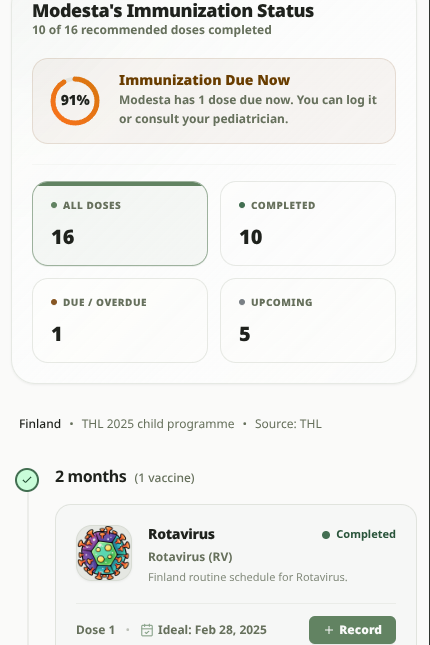
Pick your country and enter your baby's birth date. You'll see every routine vaccine on your national schedule, grouped by what's due now, what's coming up, and what's overdue.
Schedules come from each country's national immunization program (around 35 countries covered, with more on the way). Always confirm with your pediatrician or local health authority. This tool is a planning aid, not official medical advice.
How routine childhood vaccination works
Childhood immunization schedules are carefully designed by national health authorities. The tabs below cover timing, combination vaccines, and how schedules differ by country.
The science of timing: bridging the immunity gap
Vaccine timing isn't arbitrary. Newborns start life with maternal antibodies that protect them initially, but fade over 2 to 6 months. Vaccines are timed to build the baby’s own active immunity right before maternal defenses drop.
First Major Milestone
The antibodies your baby got from you start to fade. The first dose teaches their immune system to build its own protection.
Frequently asked questions
Straight answers to the questions parents ask most.
It happens to most families at some point, and it's almost always fine. You don't restart the series — you continue from where it left off. Give the missed dose as soon as practical and tell your pediatrician when the last one was given, so they can plan the next. One late dose doesn't undo the protection your baby already has.
Keep the whole health picture in one place
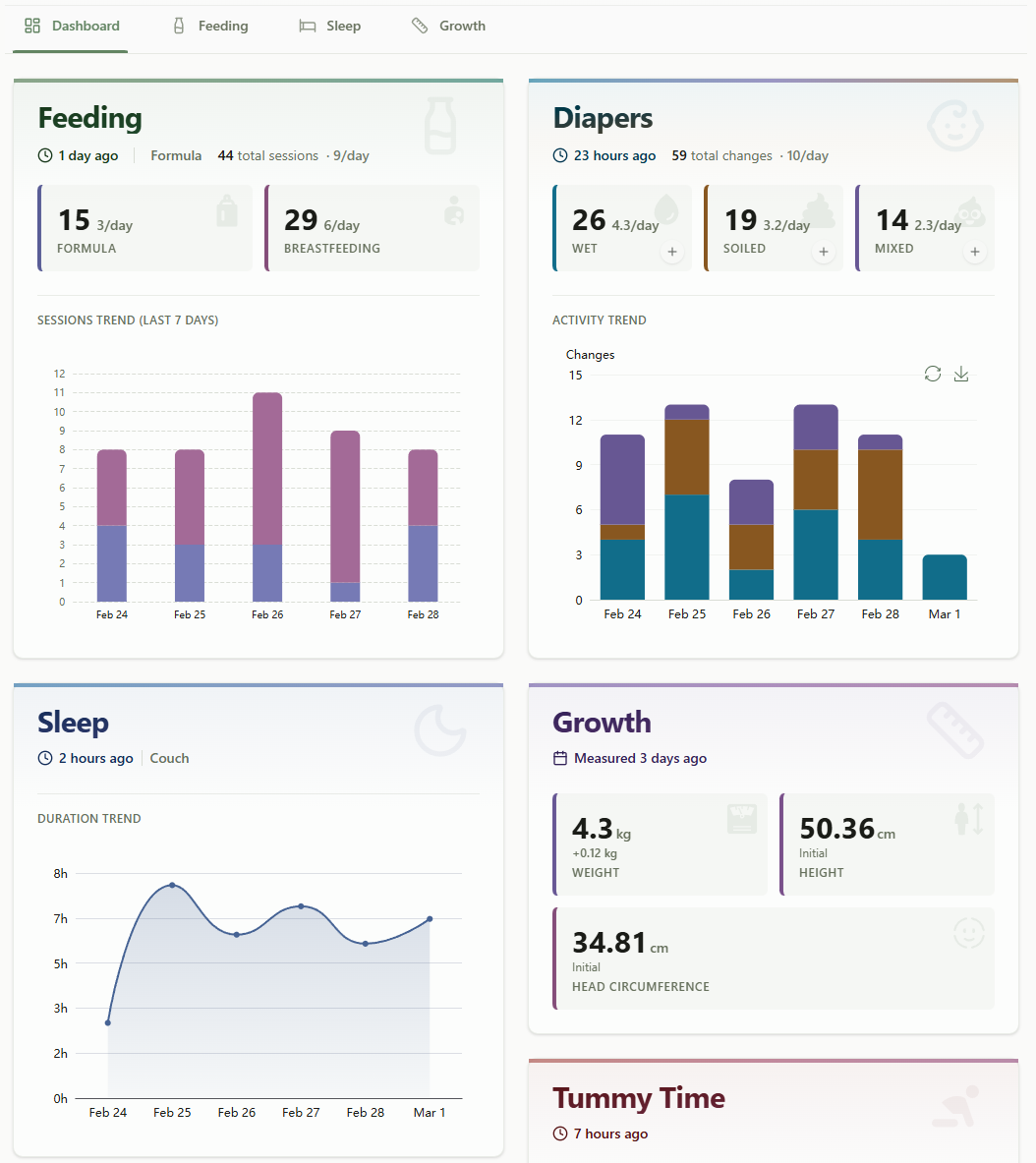
The growth and milestones tracker in Storklet combines vaccine records with WHO growth charts, symptoms, and milestones. A complete health log your care team can share.
-
WHO growth charts
Percentiles on clinical curves, at every visit
-
Vaccine records
Every dose logged, plus what's due next
-
Symptom log
A scrollable timeline for doctor visits
-
Milestones
First words and first steps, remembered
14-day trial · No credit card required
Vaccine schedule
MMR · due at 12 months
Percentile
62nd · on track